
Interviews
Studio Hour with Noz Nozawa
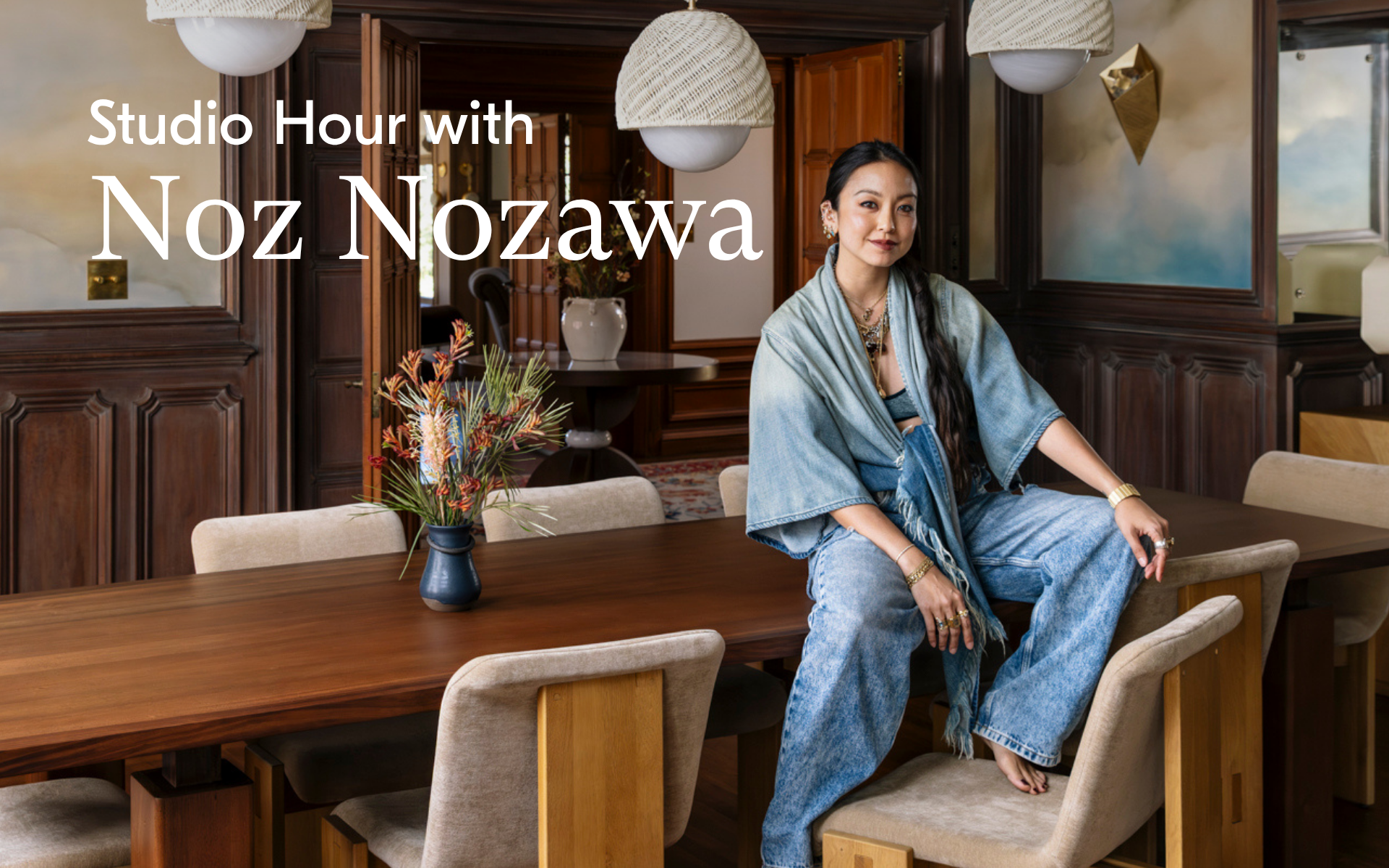
Ahead of the launch of her second collection with Corbett Lighting, we connected with San Francisco-based interior designer, Noz Nozawa, about what’s inspiring her, the process of designing interiors and lighting, and what customers can expect in this new collection.
What’s igniting your creative spark these days?
Noz: Music! This is the first time I’ve been asked where I’m finding inspiration creatively and it wasn’t something visual. Somewhere down an internet rabbit hole, I discovered contemporary Italian jazz artist Nu Genea, and jazzy pop mash-ups, and my synaesthetic brain has unlocked new creative pathways! I don’t know where they will lead, but that combined with a whole creative churn that has me really exploring the aesthetics and cultural absences of my own childhood, it’s no doubt going to be wild.
Walk us through your studio and desk setup. What's always within arm’s reach when you're deep in a project?
Noz: Our studio office is in Alamo Square in San Francisco, and it’s an “open concept” office for 4 of us. Always within arm’s reach: a jar of my favorite pencils and pens, a 25’ tape measure, a soft tape measure, 3 chargers for the ridiculous variety of devices that need different plug shapes, and dog treats for my gurl Ernie who is our office (mis)manager!
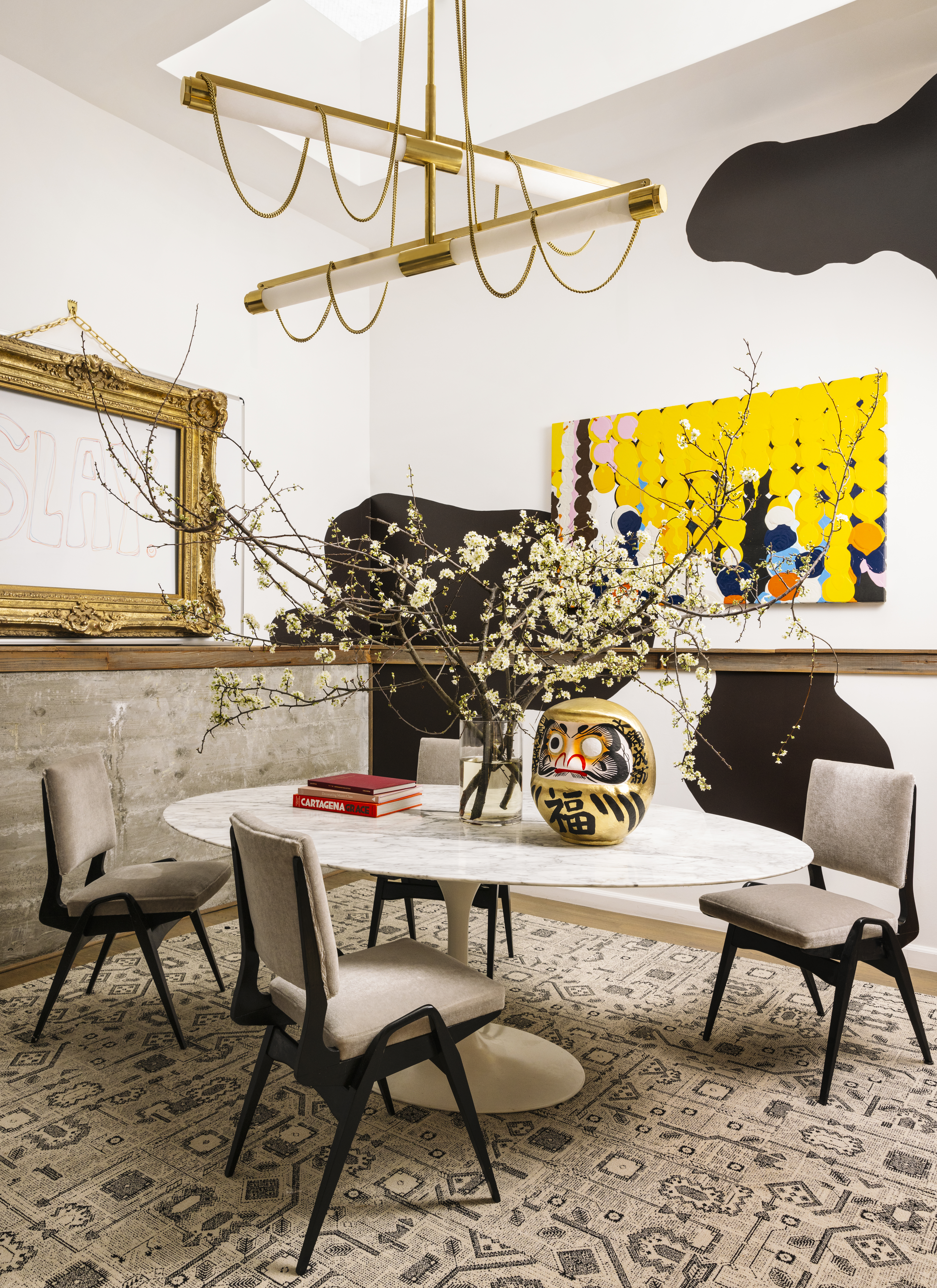
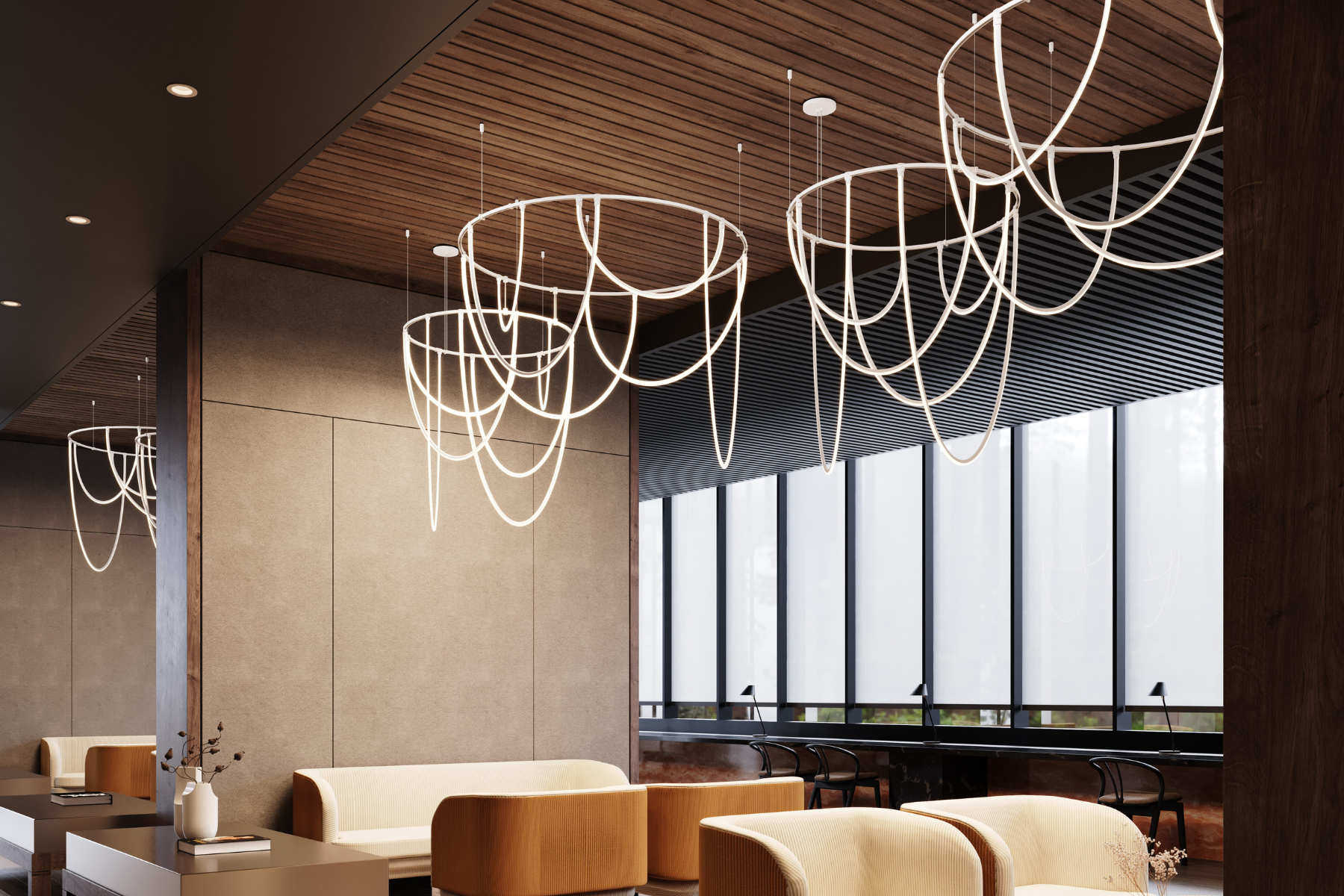
Conference Room in Noz Design Studio
Design by Noz Nozawa, Photo by Alanna Hale | Lariat Chandelier by Corbett Lighting
When starting a new space or product, what are your first steps, and which part of the creative process do you find most rewarding?
Noz: I always start with “who is this for?” and “what story am I trying to tell?” The most rewarding part of my creative process is when it gets really murky, and I start hating everything and all my ideas are terrible and everything on the board has been done before and blah blah blah… and then through a combination of effort and taking space away from the effort to let ideas congeal and let connections form, we are able to find the thread that brings all the expansive study back to a more cohesive, intentional direction!!!!! Of course, it’s so often the most challenging painful creative processes that yield some of the work I’m proudest of!
Is there a project that taught you something surprising about how light can shape space or feeling?
Noz: My Japanese Treehouse taught me the importance of the right kind of lighting. Ironically, we took away the view of the skylight in the mezzanine hallway. While you’d think that more natural light would always be better, the mezzanine was actually better being lit artificially. In every space, we were so intentional about the placement and use (or non-use!) of decorative and architectural lighting so that we could shape the mood or functionality.
Similarly, in my cabin in Tahoe, it took me years to let go of needing to completely control light. We made a decision not to add lots of overhead lighting, opting instead for lamps and just allowing it to feel like nighttime in the evenings. These decisions have completely transformed the way I experience life at the cabin: it’s so much more in-sync with nature and makes me slow down, which is the point of it being a getaway from my busy city life.
Can you tell us about the background and inspiration for this second collection? How did your first collection influence this one?
Noz: This collection takes so much of what I adored about our first collection, and adds an organic perspective. While some of the lighting designs are totally new to this collection, others incorporated silhouettes or materials that were most loved from our first collection, and expanded or adapted the language to take on a more nature-driven point of view.
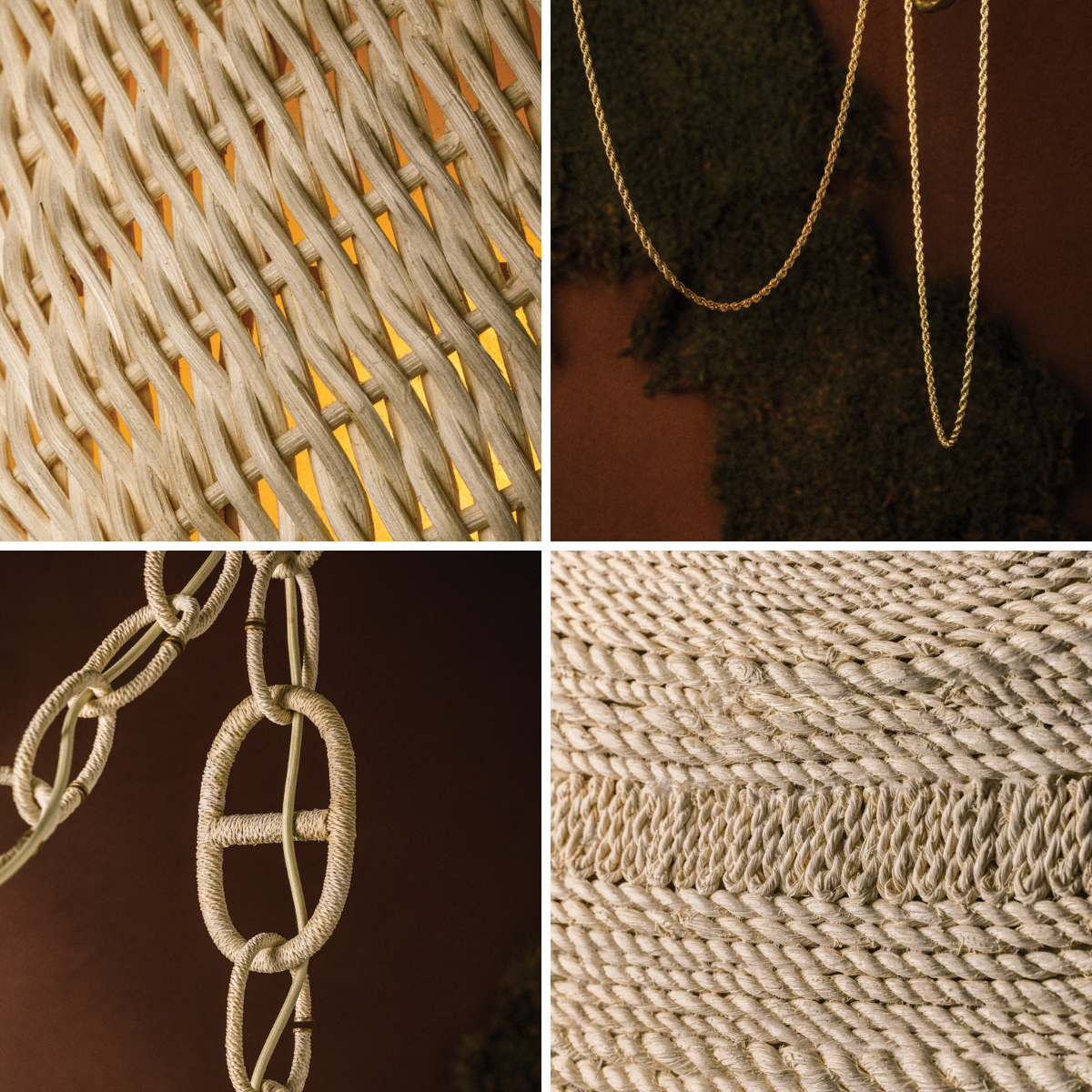
Much of my inspiration comes from my love of mountain forests. You’ll see some lights that take on the spirit of tree stumps and mushrooms that grow from trunks of trees, rendered in the glam brass and alabaster of our first collection. And you’ll see a fresh take on our Daith chandelier, but in cooler tones and woven materials that make it so well-suited to coastal-cool spaces.
Can you share insights into the prototyping or refinement process behind one standout piece?
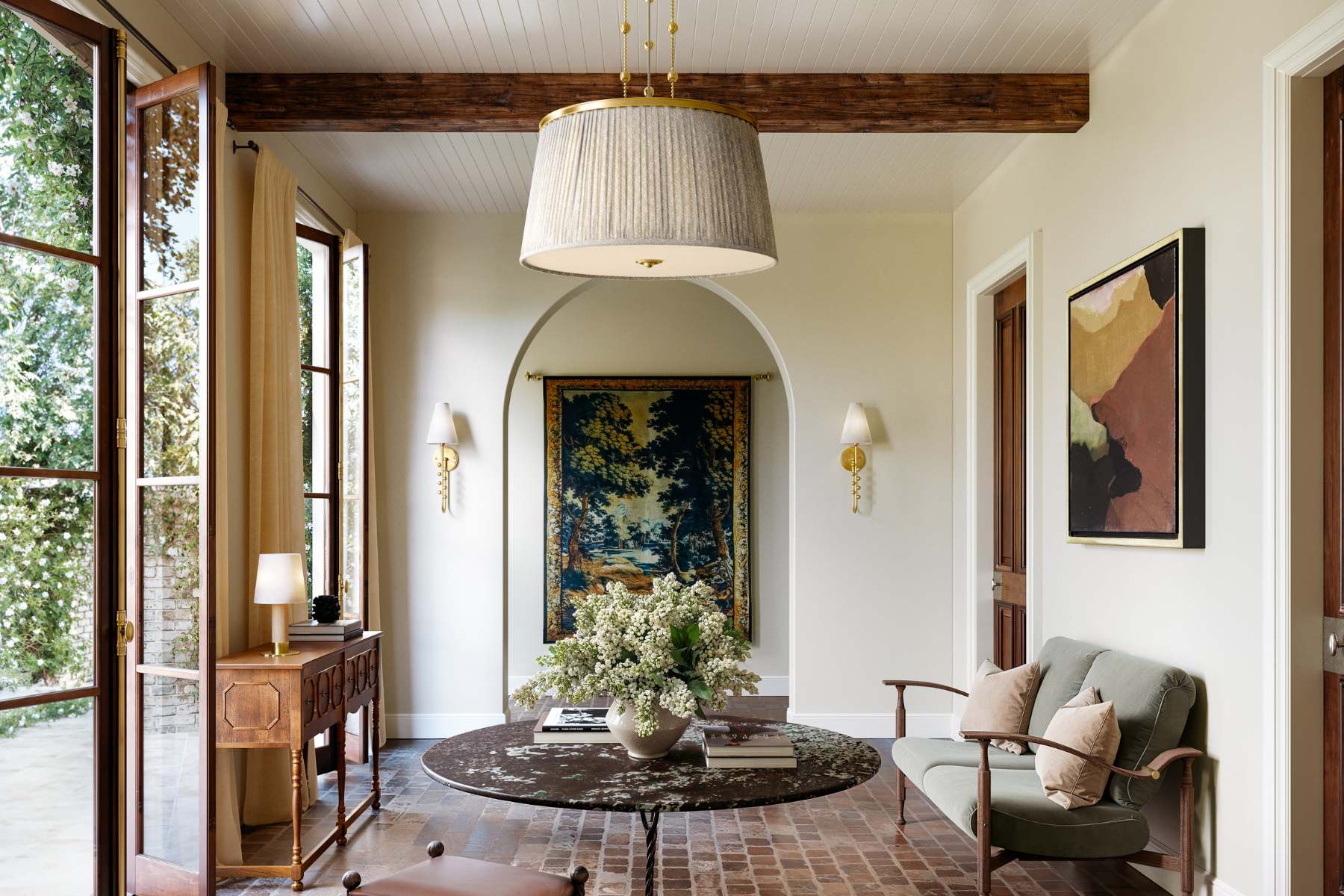
Noz: I am so proud of where we landed with our organic take on the original collection’s Daith chandelier! It was quite a collaborative process of changing the scale and proportions of nearly every component of the original and incorporating woven elements. The prototyping process was wild because it feels so much like my original sketch. We went back and forth on whether my idea to take inspiration from forest acorns and putting a woven “cap” on the glass lighting components would make sense. Also, a later-stage edit we made to this fixture is a corded electrical wire with rope cording that matches the woven decorative “chain” of the light fixture! I’m really thrilled with this thoughtful detail that makes the whole fixture sing.
Design by Noz Nozawa, Photo by Alanna Hale | Daith Chandelier by Corbett Lighting
Were there any materials, forms, cultural references, or details in this collection that you were especially excited to explore? Is there a sourced element with a story or special meaning behind it?
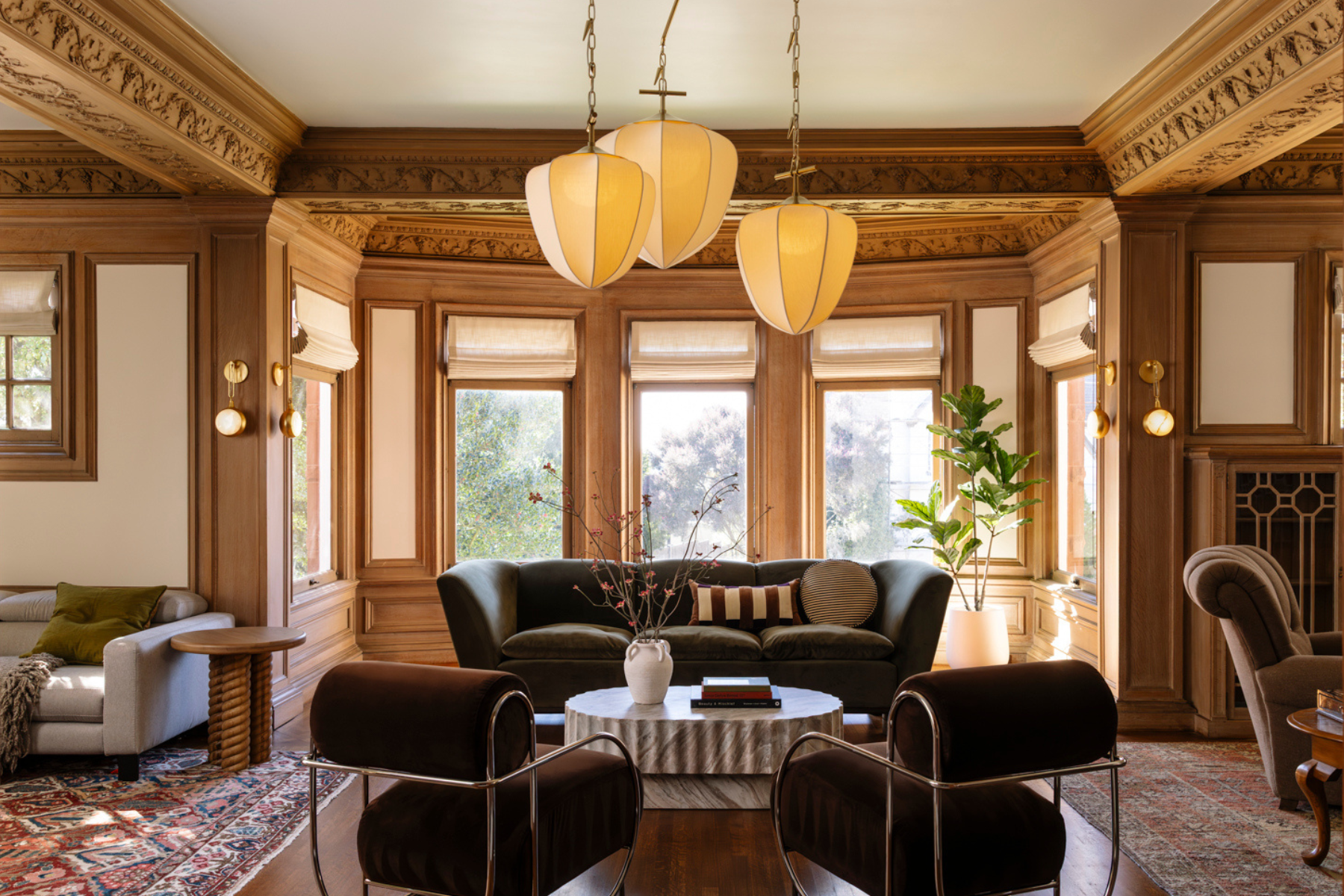
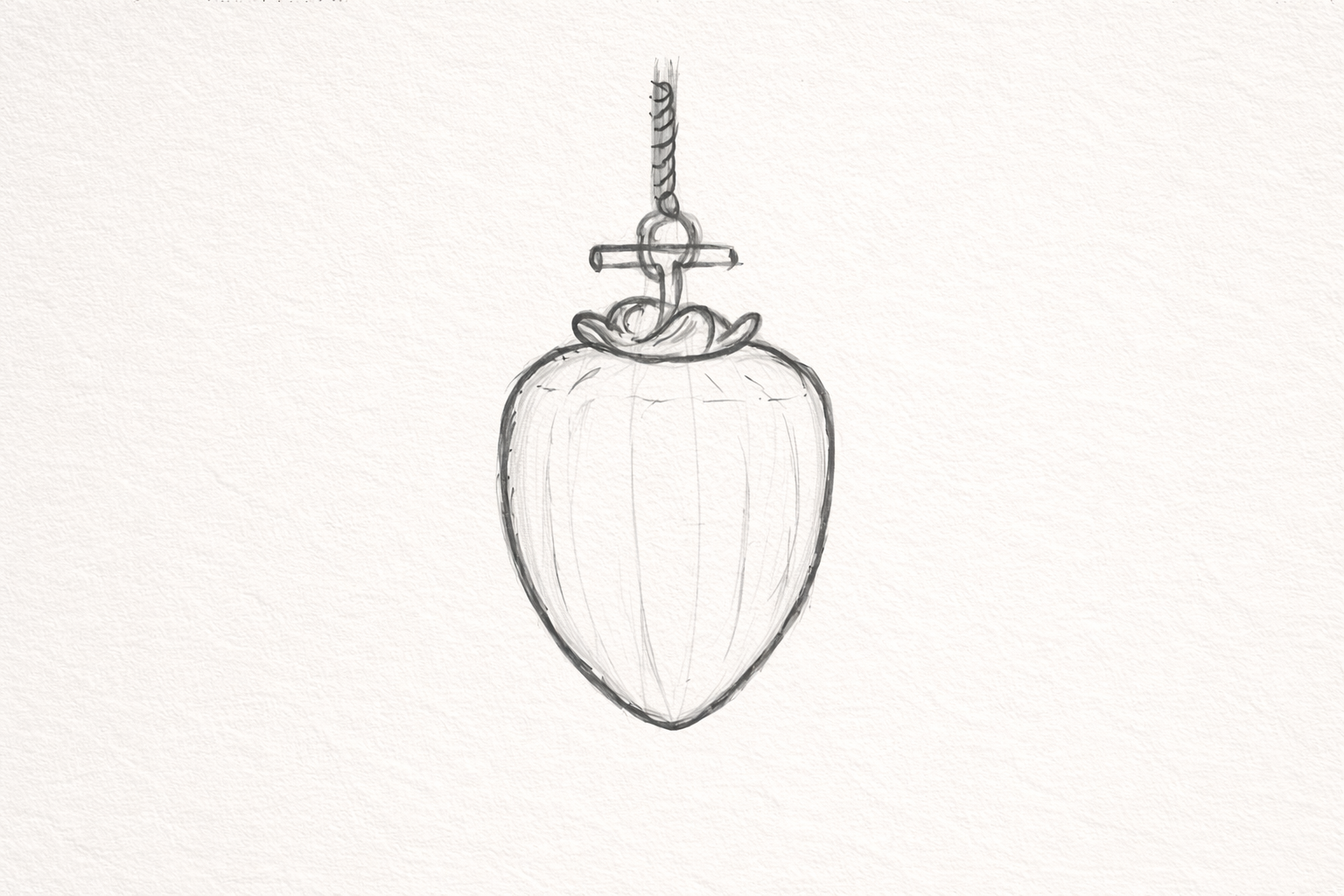
Noz: I’m particularly delighted that we got to bring to life my idea of turning Hoshigaki, a Japanese process of candying persimmons by hanging them from strings and massaging them, into pendant lights and a chandelier! Seeing Hoshigaki strung up in restaurant windows is one of my favorite sights in late fall and early winter! They are decorative and festive while also being a very practical way of preserving the fruit. The comparison to lighting is uncanny! I conceived of this design as being a silk shade, with a big T-bar at the top connecting it to the chain. The T-bar is intended as the stem of the persimmon, which is clipped this way to keep it strung up securely. I am beyond pleased too that Corbett Lighting let me create more than one shape of “Hoshigaki” so that there can be installations where the different proportions feel organic when placed together.
What did you learn from the process of designing your first collection that directly influenced this one?
Noz: How to turn an idea into a light fixture that doesn’t break your ceiling or your factory! I am so incredibly grateful to the Corbett Lighting team for taking me on an educational journey with my first collection. I learned so much, not just about manufacturing and materials, but about how to think of on-site adjustability. For example, our Mariner chain is one of the well-loved parts of my first collection. I had originally insisted on the whole chain being a Mariner chain, but in our process, I learned that an installer will need to be able to open links of the chain to shorten it –– so an all-Mariner chain is not possible! Our final designs, which feature a Mariner link every 5 or 7 links (depending on the fixture), were the perfect compromise. So of course, for our new collection, I took those learnings and found yet-another way to mess around with the chain, this time inspired by charm bracelets and a railing chain I saw in the U.K., you’ll see “thorns” dangling off the chain of one of our designs!

What design or lighting trends are you personally drawn to right now, and are there any small details you tend to obsess over that others might overlook?
Noz: I am loving lanterns and soft shades lately. Maybe this is less of a trend because this was important to me with our first collection, too, but I feel strongly about not having exposed bulbs everywhere. I’m glad there are brands making matte-glass bulbs that help distribute light from the filament. I’ll choose a glowy light source any day! It might be an unpopular opinion, but lately I’ve been very drawn to the notion that perhaps a home SHOULD be a little dimmer and a lot warmer when it’s dark outside. Sure, for functional spaces like a kitchen, having daylight-replicating light can be valuable – and a task lamp at a desk is equally relevant. But I am keen to keep exploring this warm glowy prerogative with lighting.
Designing lighting is different from designing interiors. What continues to excite you about each?
Noz: Well of course designing interiors was my first love and what I believe I was put on this planet to do! If you'd asked me when I started my firm whether I thought I’d someday be designing lighting, I would have laughed – I am so very lucky. I love both processes of design so much. With interiors, design is like being a conductor. There’s a really fun improvisational part about designing interiors, where I might chance upon an object or a material and drop it into a design, and it completely enhances or transforms the mood!
Designing lighting, on the other hand, requires the opposite approach to creativity. For example, with interior design, there is one client we serve per space – even when the client is a business owner whose store or restaurant will serve many others. But with lighting, I’m trying to balance designing a piece that feels like it’s offering something unique that isn’t offered in the market yet, with a design that feels versatile enough that it could belong in lots of different settings. I’m not even thinking of my clients or my projects when designing.
The thing that is amazingly in common between the two processes is how important my experts are. When we’re designing a bespoke furniture or built-in concept for a space, so much of what becomes possible depends on the craftspeople and artisans who will bring it to life. Similarly, with lighting, I am always humbled by how creative the in-house Corbett Lighting team of designers and engineers are. They interpret my design concepts and figure out what about them can be manufactured and lit, and which of my ideas might weigh 1,000 pounds how I drew it! HA!
Design by Noz Nozawa, Photo by Alanna Hale | Riviere Chandelier by Corbett Lighting
Looking back, what do you hope people feel when they walk into a space you’ve designed?
Noz: I hope they feel GOOD – I hope that they feel the love that’s been imbued into the structures and the little moments, that they feel seen and understood by their surroundings, and that they are able to unwind or wind up or dream up to be their best selves within these spaces.
Noz’s attention to detail and signature jewelry-inspired designs get an organic influence in her new collection with Corbett Lighting, available to explore April 23 here.