
Interviews
The Nature of Materiality: A Conversation with HVLG Designers
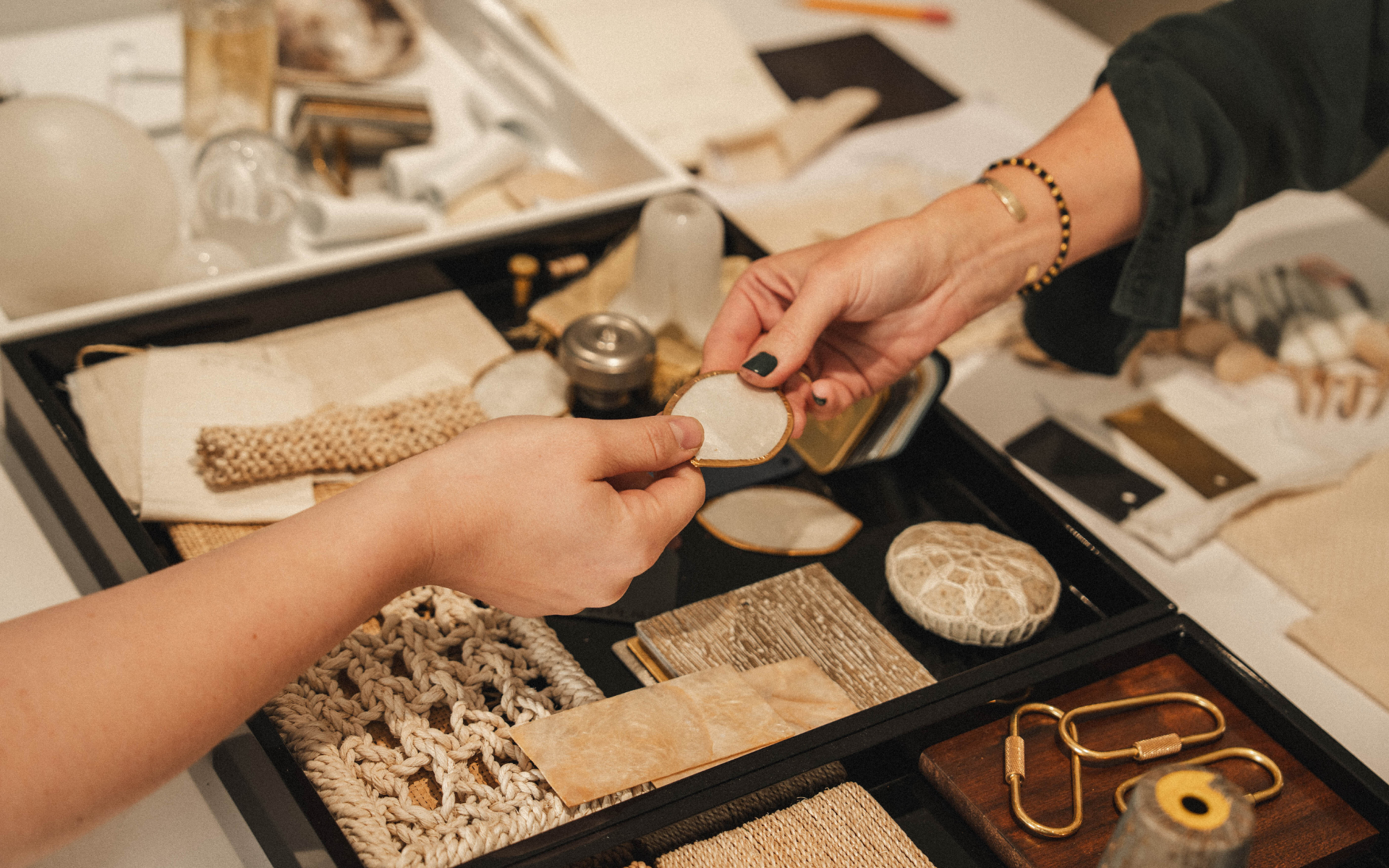
At Hudson Valley Lighting Group, every fixture begins with a story. Designers and engineers work side by side to shape ideas into pieces that are as functional as they are beautiful. Some designs begin with carved wood, while others take shape through strands of delicate hand-threaded beads. Each material is carefully chosen for the feeling it brings to a space. To get a behind-the-scenes look at how these ideas come to life, we sat down with Asime and Raphe from the HVLG design team to talk about inspiration, craftsmanship, and the role materiality plays in transforming a sketch into a finished piece.
Q: Do you tend to start the design process with an idea for a fixture, and then decide the material, or do you find yourself designing around the material itself?
Asime: It’s usually a bit of both, but the strongest ideas tend to come when material and form are considered together from the start. Sometimes a silhouette leads, and the material supports it; often, the material (weight, translucency, texture) suggests a form. We can’t make paper act like metal, for example. The goal is always to make it feel like they were meant for each other, not applied after the fact.
Raphe: It depends! Sometimes I’m inspired by a particular archetype or silhouette, and I want to imagine it with a more natural touch. On the other hand, we constantly have new natural material swatches coming in and out of the studio that spark inspiration. Both approaches are a great starting point for a design!
Product Spotlight: Moissanite Chandelier by Hudson Valley Lighting
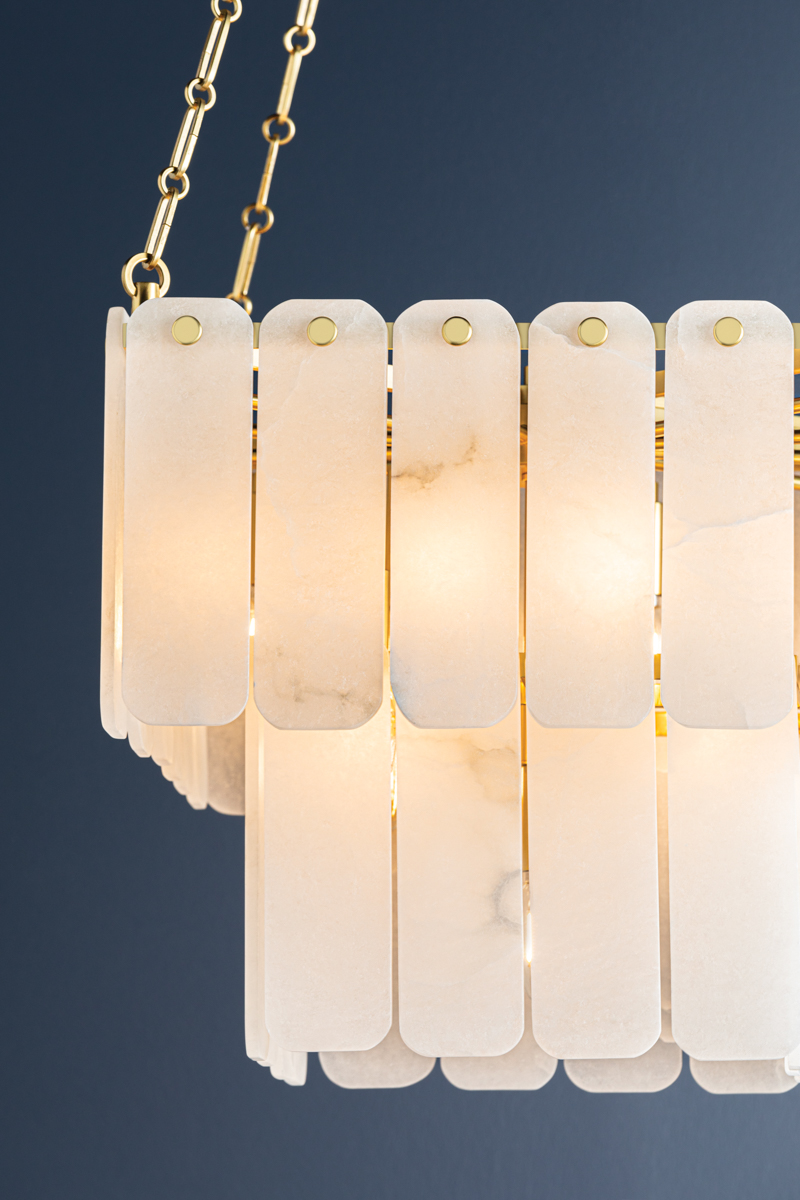
"Layered alabaster panels create a rhythmic, architectural form while softly diffusing light into a warm, even glow. Alabaster is a wonderful stone to design with, its transparency makes it a perfect material for lighting while also adding a lux material. The contrast of patina brass detailing adds precision, balancing the natural variation of the material.”
Q: How do you decide which natural material is right for a specific fixture?
Asime: It comes down to what the fixture is trying to express and how it needs to perform. Some materials lend themselves to softness and diffusion, while others bring structure or contrast. I’m looking at scale, light output, and the design language, also heavily depending on the brand itself. Each brand has a set of design guidelines we like to follow to keep things from overlapping. For example, when we use alabaster in Hudson Valley fixtures, we keep the silhouettes classic and timeless, like the Moissanite Chandelier. However, for Corbett fixtures, you’ll see alabaster in more high-designed statement pieces, like the Lariat Chandelier.
Raphe: Every material has its own personality – how it wants to move, the shape it wants to be… For example, rattan has a rigid structure that’s great at holding shapes it’s woven into, while linen lends better to gathering and pleating. Both are great at achieving a soft natural touch, just in different ways that are specific to that material.
Product Spotlight: Lure Chandelier by Corbett Lighting
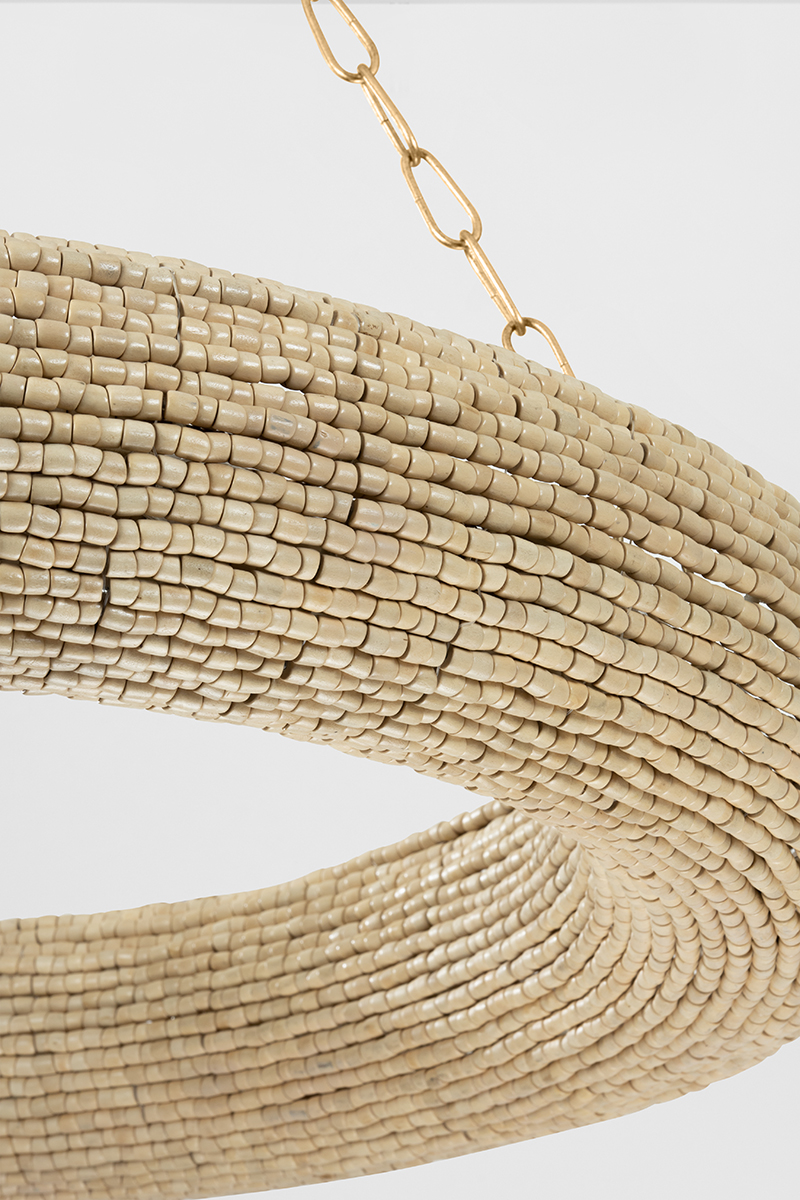
“The design is driven by material first—specifically something that could bring warmth, texture, and a sense of ease at a larger scale. The wrapped natural fiber construction allows the fixture to feel substantial without becoming visually heavy.”
Q: What techniques do you find make the most impact in a design?
Asime: Restraint and contrast tend to have the most impact. Letting one idea lead, whether that’s a material, a detail, or a proportion, and supporting it with quieter elements.
Raphe: Personally, I find undulating or scalloped edges to be a great way to add an effortless flair to a design – which naturals are inherently good at doing.
Product Spotlight: Memphis Wall Sconce by Troy Lighting
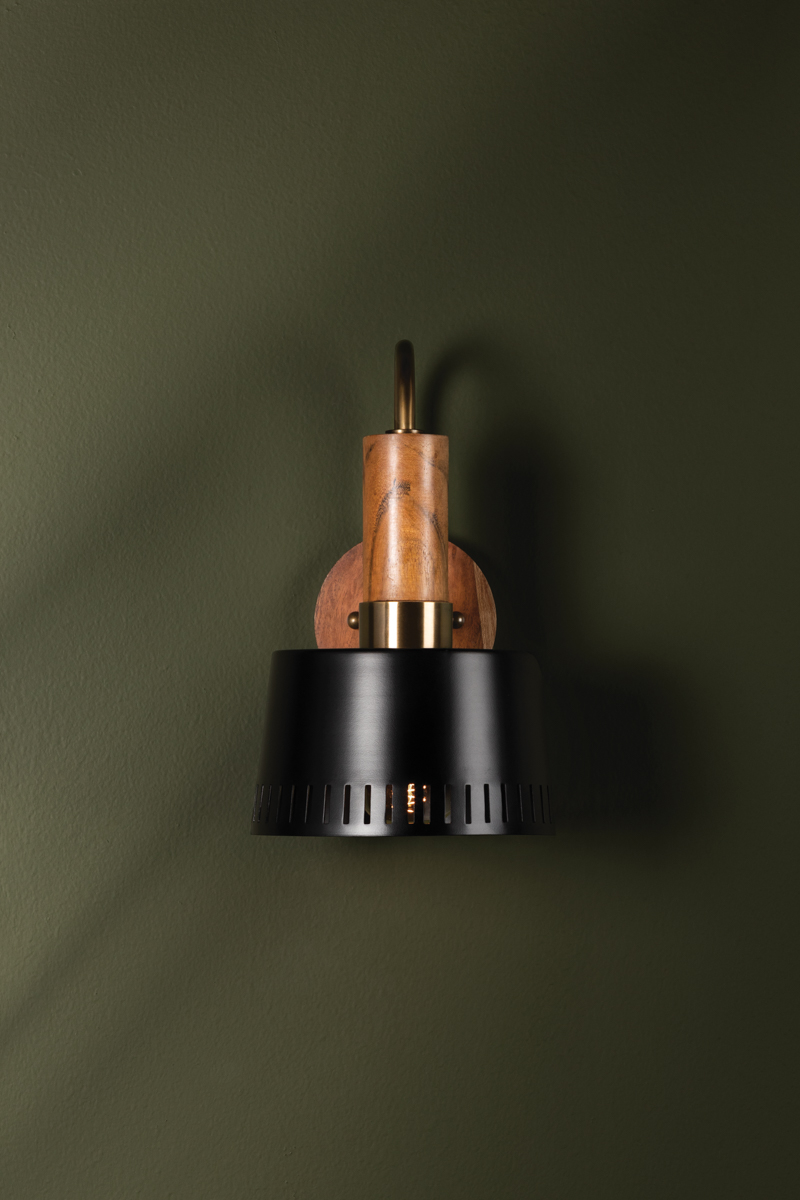
“The design is driven by material contrast—pairing a perforated black metal shade with natural acacia wood to introduce both structure and warmth. The wood is used as an accent within the overall frame rather than a singular focal point, adding subtle texture and variation against the metal and patina brass hardware.”
Q: How do you balance the inherent imperfections of natural materials with the precision required in lighting design?
Asime: It’s about being intentional with where you allow variation and where you don’t. Critical touchpoints like fit, alignment, and light output need to be tightly controlled, while more visible surfaces can embrace variation, and sometimes help make a piece feel more artisanal, or “perfectly imperfect” as we like to say.
Raphe: Designing into a material’s strengths makes for better designs - glass that is soft, fabric that flows, and wood that has curves. The casual aspects of natural materials often contrast with the technical precision of lighting; together they make something both beautiful and useful.
Q: How do natural materials affect lighting in a room?
Asime: They tend to soften and diffuse light in a way that feels “moodier”. Materials like linen, paper, or lightly textured glass break up the light and reduce harsh brightness.
Raphe: Naturals are often either opaque—like paper—or have negative space in their structure—like wicker or saguran. This is perfect for lighting a room, as it lets the material's organic qualities shine while allowing warm light to pass through, which is ideal for a living space.
Product Spotlight: Aimi Chandelier by Corbett Lighting
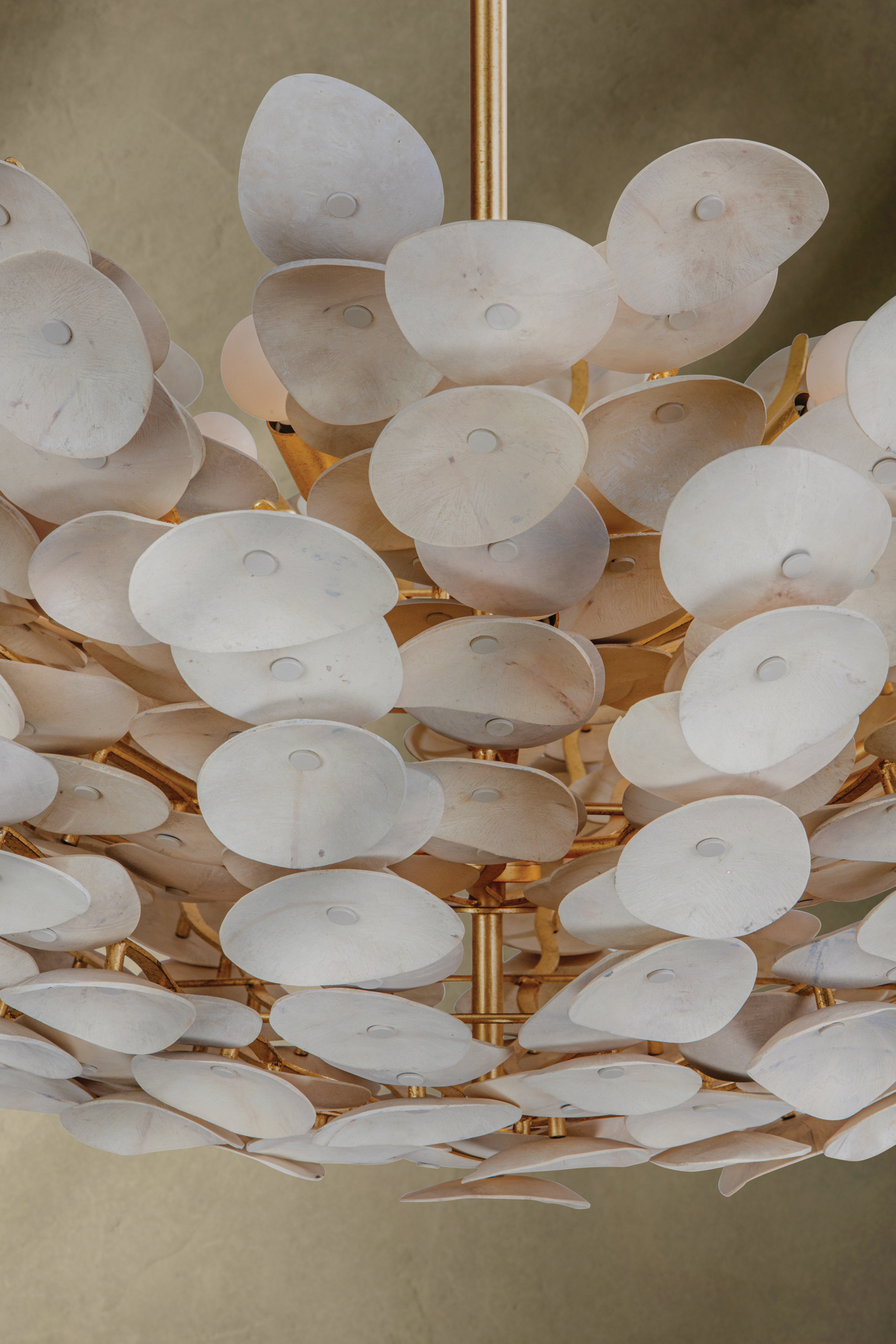
“The design centers around creating a sense of lightness and movement through repetition. The coco shell discs were chosen for their natural texture and subtle variation, allowing each piece to catch and diffuse light in a slightly different way. These shells allow us to create a silhouette that is voluminous but not heavy feeling.”
Q: One material you’re excited to experiment with next?
Asime: I’m really interested in pushing paper further, especially in more structured or architectural forms. There’s something compelling about taking a material that feels inherently soft and using it in a way that feels more intentional and sculptural.
Raphe: I have been obsessed with designing using oyster shell recently! The effortless botanical forms you can achieve using them are beautiful and honest to the material. The Galle Chandelier in Corbett was a recent example of this. I wanted to showcase the natural beauty of an oyster shell, arranging them in blossom-like structures with a G-bulb nestled inside.
Explore more of our expertly crafted designs featuring natural materials here.