

Interviews
Studio Hour with Maruka Tarabay of Katara Studio
Maruka Tarabay, founder and CEO of Katara Studio, is a San Diego-based interior designer with a background in environmental design and structural engineering. With over 25 years of experience, Tarabay combines her technical background and creative sensibility to create high-quality and individual spaces for any client. Her background spans from residential homes to government buildings to commercial spaces, making her a true expert in her field. HVLG spoke to Tarabay about her expertise, the future of design, and using architectural lighting in residential homes.
Can you tell us about your background and how your design style has evolved over time?
My background spans more than twenty-five years in architecture, interior design, construction, and project management. Over time, my work has evolved away from thinking in terms of style and toward designing for living. At Katara Design Studio, our process is centered on understanding how our clients want their home to feel, function, and support their family's daily life. Architecture provides the framework, but light, materials, art, and furnishings shape the experience.
What are your first steps when approaching a new project, and which part of the design process do you find most rewarding?
Every project begins with conversation. As the project develops, I think about the home in layers of experience. Architecture establishes one layer. Natural light creates another. The goal is never to make those elements compete, but to allow them to work together in support of everyday living. The most rewarding part is watching those layers come together so naturally that the home no longer feels designed.
What atmosphere were you hoping to create in this project, and how did lighting help bring that vision to life?
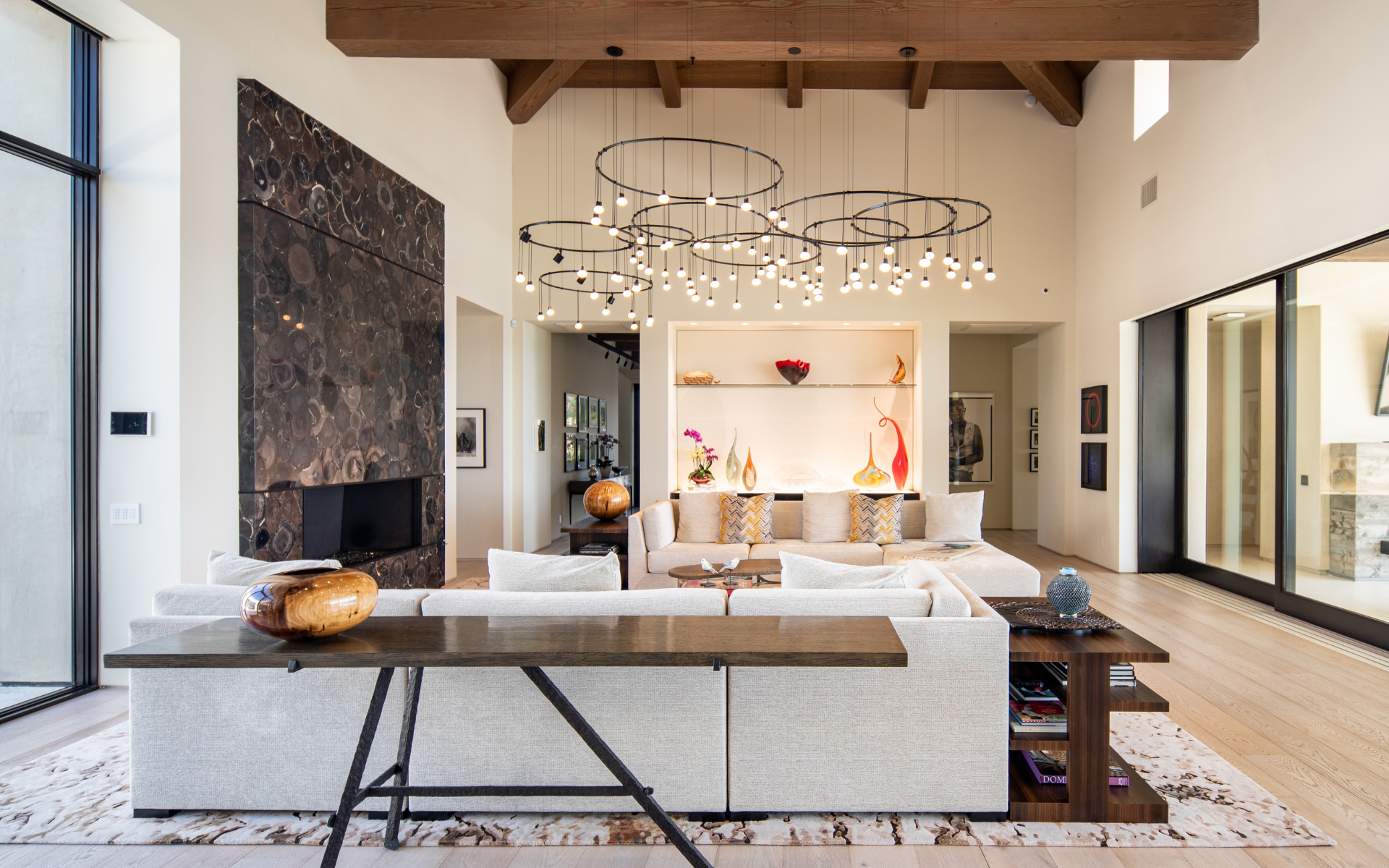
This home presented a wonderful opportunity because it needed to serve many purposes simultaneously. It houses an extraordinary collection of photography, blown-glass sculpture, ceramics, and artwork, yet it also needed to remain a warm and welcoming place.
Lighting established focus within the galleries, created intimacy around gathering spaces, revealed the richness of natural materials, and gently guided the transition from daylight to evening.
At what point did you decide to use architectural lighting in a residential space? How did that decision impact the rest of the design?
I've come to think of architectural lighting as part of the architecture itself, not something that's added at the end of a project. In a home like this, where indoor and outdoor living are so closely connected, we spent considerable time thinking about how natural light would move through the spaces throughout the day. Lighting informed artwork placement, ceiling composition, millwork details, display niches, furniture layouts, and how people would move through the home.
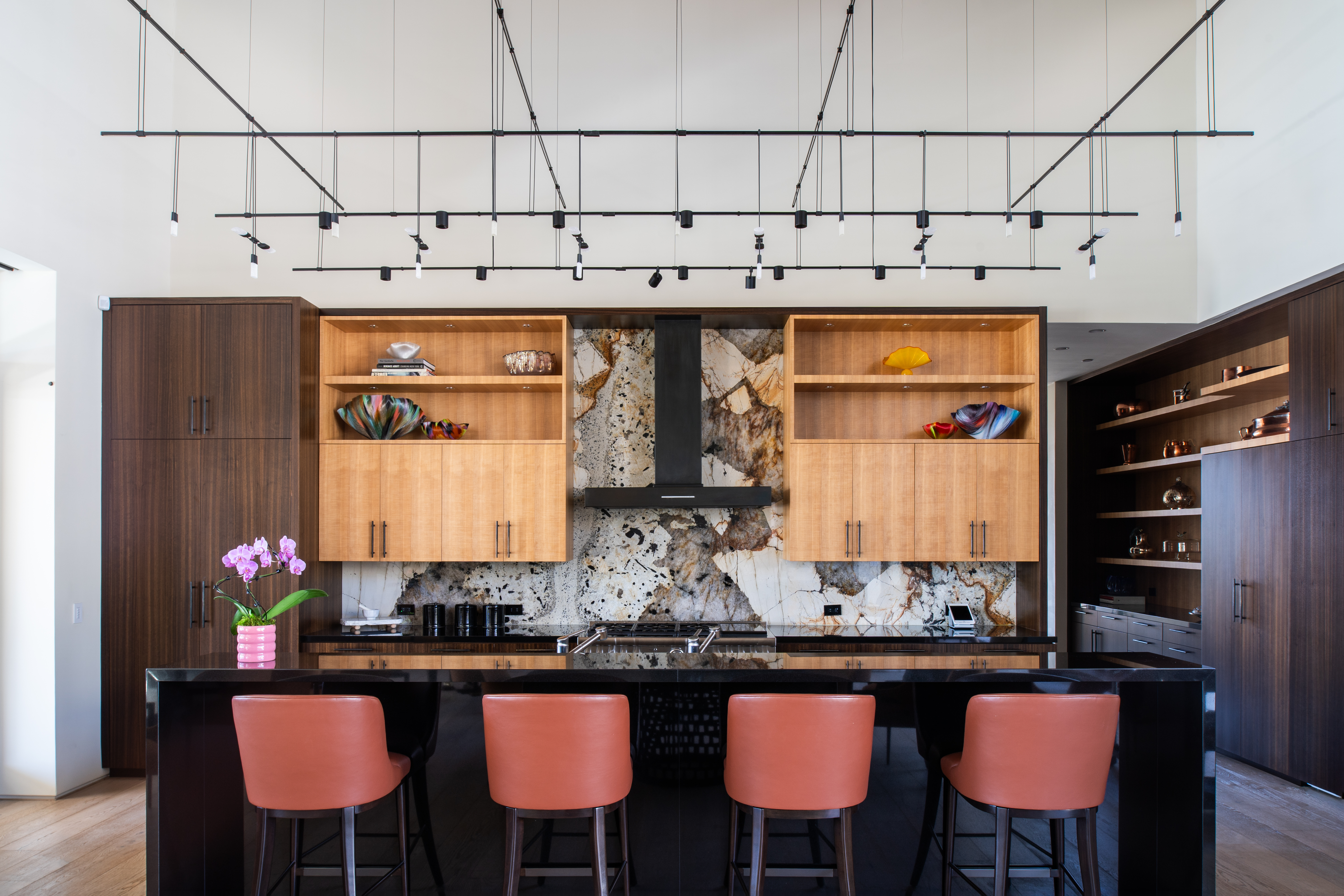
Custom Suspenders Configuration by Sonneman
Design: Maruka Tarabay of Katara Studio, Photo: Maha Bazzari of Studio MAHA
Could you talk us through the process of designing a configuration for the Suspenders fixture?
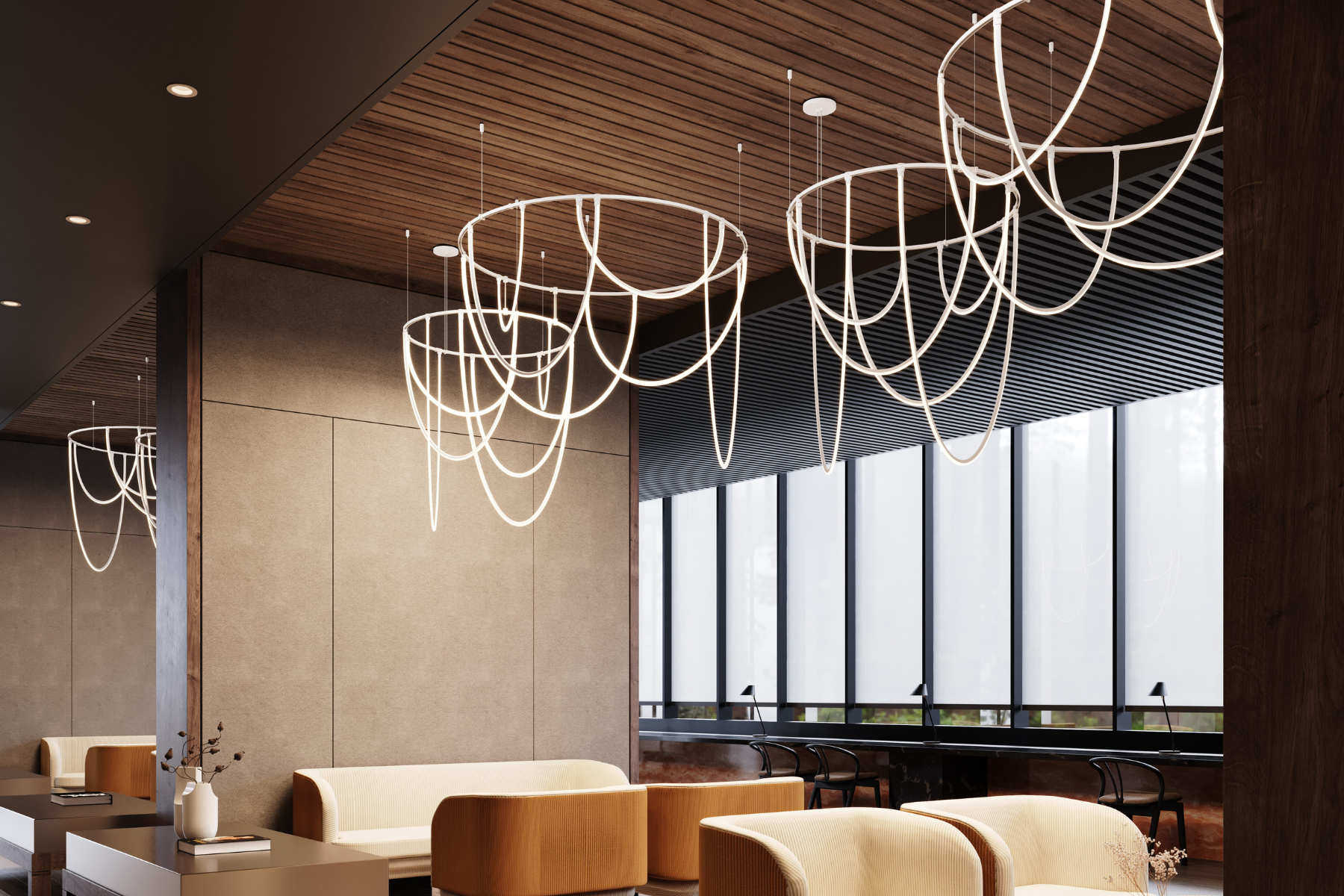
The kitchen required a lighting solution that could provide both clarity and warmth within a very large open volume. The Suspenders Precise System immediately stood out because of its ability to introduce order without feeling rigid. The Gridscape configuration establishes a disciplined geometry that responds beautifully to the architecture while bringing the lighting down to a more personal scale. Its role is very different from the Offset Rings in the great room. While the Precise System establishes clarity and rhythm, the Offset Rings introduce movement and a sense of celebration.
How does your approach differ when designing for residential spaces as compared to commercial spaces?
The greatest difference is the intimacy of the relationship. Residential design invites you into the everyday life of a family. Whether I'm working on a residence or another type of project, my philosophy remains the same: design begins with people. But residential work offers the unique opportunity to shape environments that become part of a family's story, where every decision contributes to the experience of living rather than simply occupying a beautiful space.
What made Sonneman the right partner for this project, and how did their design language and values align with your aesthetic?
The best collaborations happen when designers and manufacturers share a common way of thinking about design. What resonates with me about Sonneman is that their work treats light as an architectural medium rather than simply a decorative element. Their systems combine technical precision with sculptural restraint, allowing lighting to shape the experience of a space without overwhelming it. That philosophy aligned beautifully with our goals for this home.
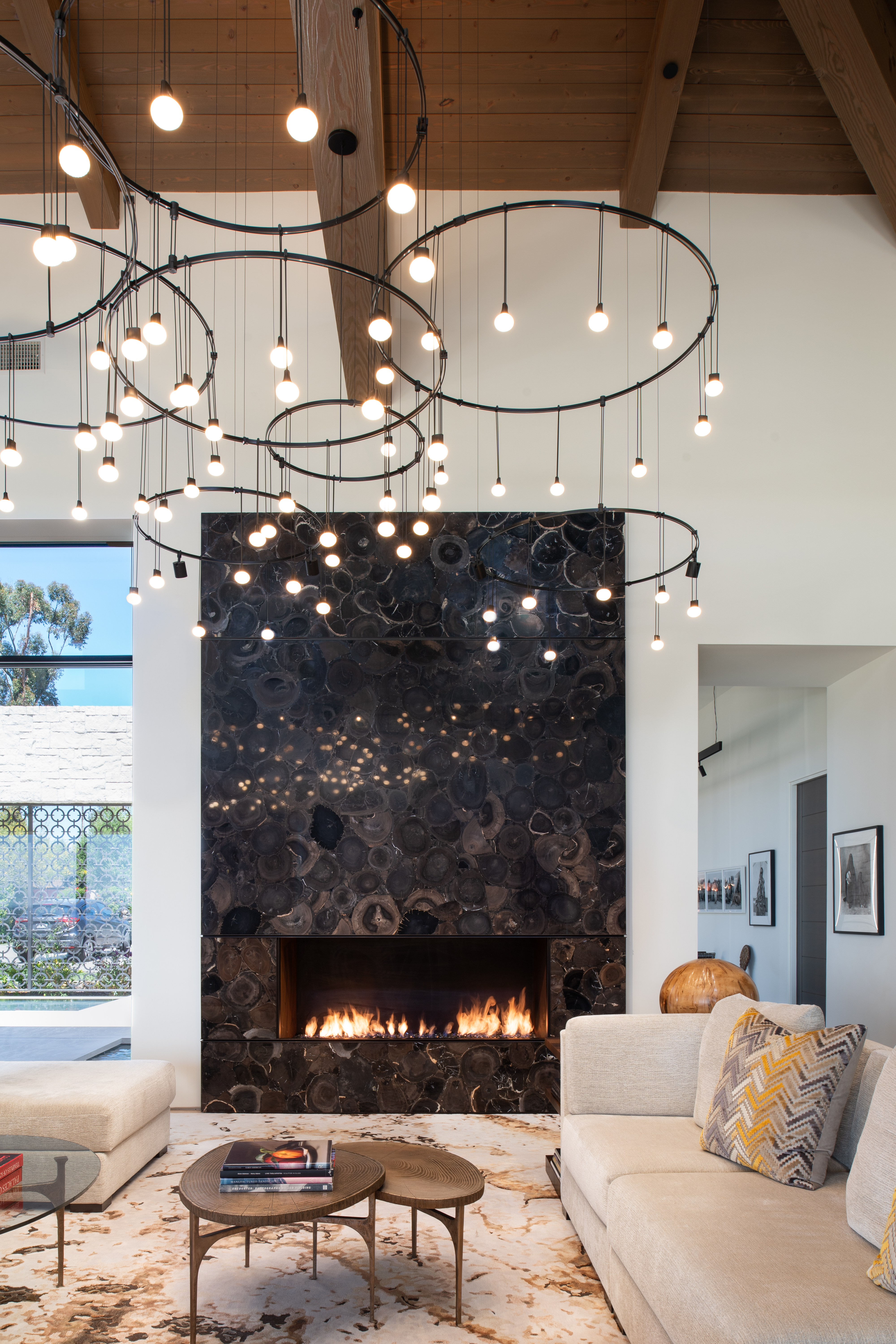
Suspenders Offset Rings by Sonneman
Design: Maruka Tarabay of Katara Studio, Photo: Maha Bazzari of Studio MAHA
Looking ahead, what excites you most about the future of lighting design, and what do you hope people ultimately feel when they experience your work?
What excites me most is seeing lighting become increasingly integrated into how we think about the human experience of space. I believe the future lies in creating environments where natural light, architectural lighting, sculptural fixtures, and thoughtful controls work together seamlessly. Ultimately, I don't hope people remember a particular fixture or design detail; I hope they remember how naturally the home supported the moments that mattered. If people leave feeling more connected to their home, to one another, and to the life unfolding within it, then I believe the design has truly succeeded.
Explore HVLG’s collection of architectural lighting here!